Resiliency of Angeles: Surviving Not Just War But Also Calamities
Throughout its history, Angeles has survived not only wars, but also natural disasters of different kinds. A powerful typhoon struck on October 7, 1871, destroying hundreds of houses as well as thousands of colorful lanterns and paper castles designed for the “La Naval” and “Fiesta ng Apo” feasts.
The town was hit by an influenza outbreak in 1918, which claimed many lives. The deceased were allegedly dumped on carts and buried en masse while the plague took lives by the minute.
The town also experienced a locust infestation in 1939, along with the rest of Pampanga, and a series of conflagrations that destroyed the public market, the worst and costly of which was on January 19, 1982, when more than P20 million worth of property was lost and the latest at the year 2001.
After 40 days of torrential rainfall, the entire province of Pampanga was submerged in a deluge of biblical proportions in 1972. While Angeles City, which is located at a comparatively high elevation, was spared, property was destroyed when raging rainwaters scoured the banks of the Abacan River and the Sapang Balen Creek, taking down both private and public facilities and infrastructures like houses, bridges, different building and many more.
The endurance of the Angeleños was tested once more in 1991, when Mount Pinatubo erupted. The beautiful mushroom-like ash cloud it spewed on June 12, 1991 overshadowed the impending doom. On June 15, the Angeleños experienced their deadliest eruption in living memory. This marked a turning point in the city’s past that will live on in the minds of all Angeleños for the rest of their lives during that time.
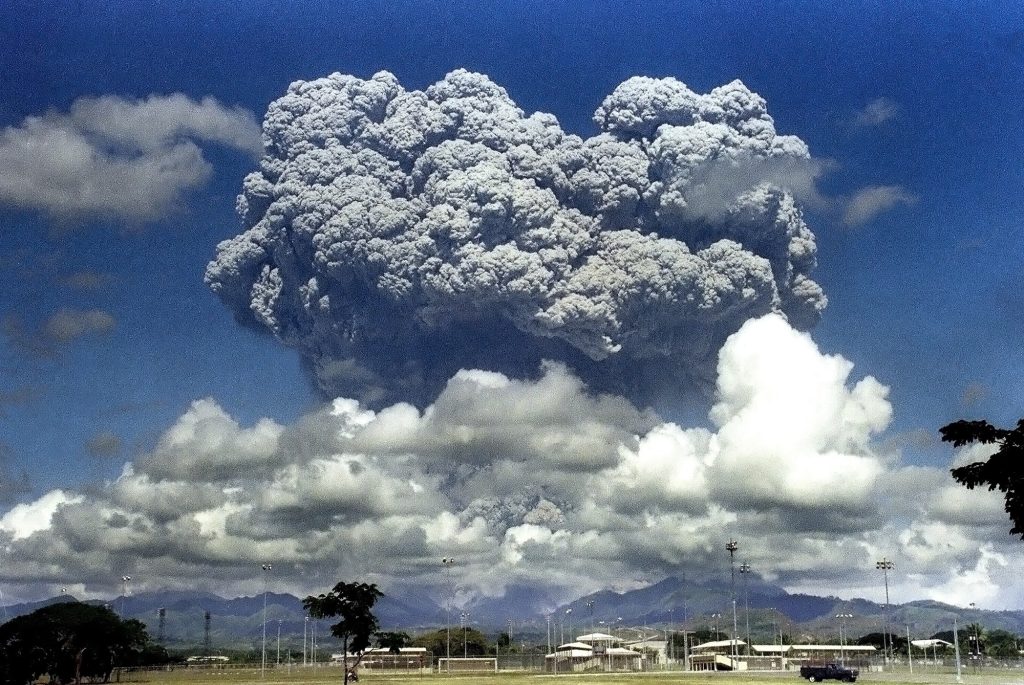
Mushroom Cloud from Mt. Pinatubo Eruption, taken by Naeg, 1991. (Klemetti, 2016). 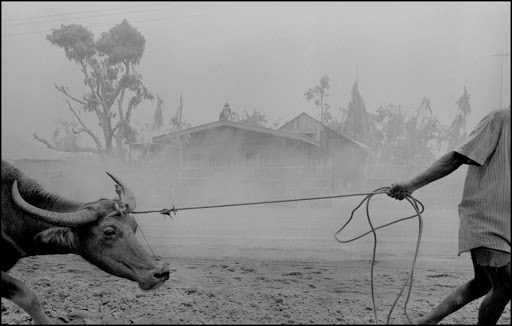
Angeles City, Mount Pinatubo Eruption, 1991. (Widener, n.d.).
When Mt. Pinatubo exploded on June 12 and 15, 1991, it caused chaos and devastation on Angeles. The major eruption of the volcano, followed by intense ashfalls and mudflows, devastated homes, killed people, and displaced thousands of people. It also took a toll on Clark Air Base, reducing its utility to the point that the US Air Force had to abandon the base and and ending the US military presence in the city until the Philippine-American Military Bases Agreement was revoked.
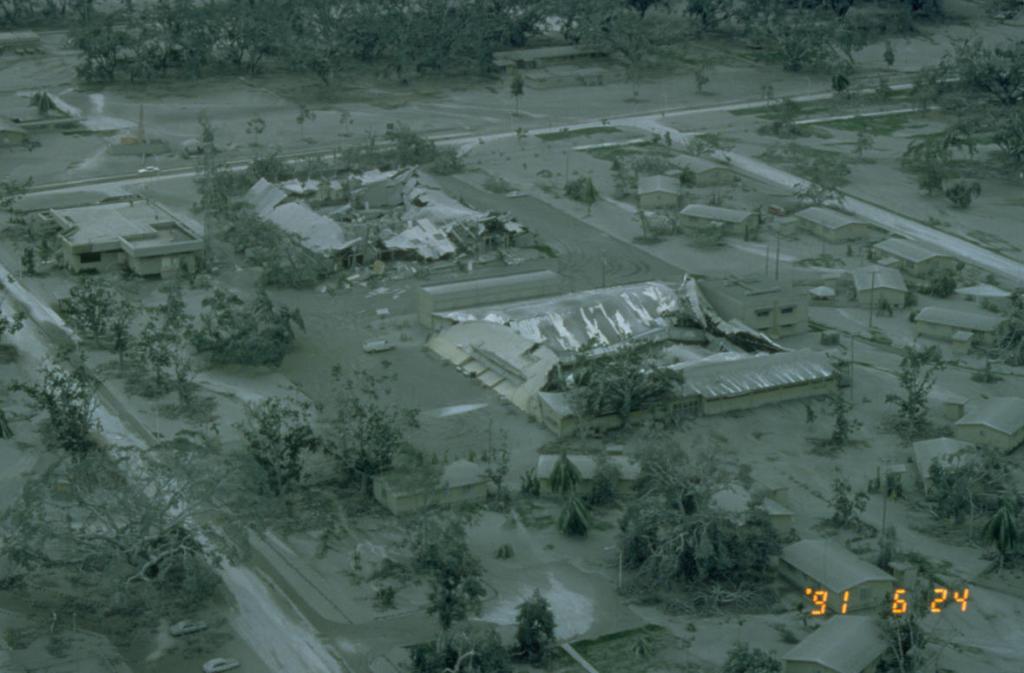
For a while, Angeles’ economy experienced a recession, as it is common for any place to lose vibrancy after a disaster. However, this did not last long, as soon as the city was rebuilt and Clark was revived by the national government, this time as an industrial region, the city’s luster returned. However, despite having already seen turmoil, the city continues to face development and time problems. How it responds to these issues will determine the future of the city and its people, as well as how they will do in today’s globalized world.
 Angeles City: Home of Guardian Angels